Gilded
Serpent presents... “She
is not only a belly dancer, but an artist who played a role
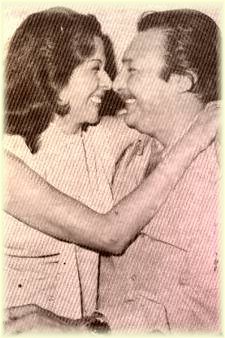
in shaping Egypt’s modern culture.” There were many who danced before her and many who followed in her dance steps, but it was she who immortalized the dance on the silver screen. Her name was Badawiya Mohamed Karim Ali Sayed but, to all who knew and loved her, she was known as Taheyia Karioka. Badawiya Mohamed Karim Ali Sayed was born in 1919 to a good and respected family in a small village called Manzala in Egypt, north of the delta. They moved soon after to Ismalia where she began dancing as a teenager. By the 1920’s, Cairo had become the established center for the entertainment industry in the Middle East. Artists and performers gathered there and they set the trend for dance, music, cinema, and theater. As a result, a cabaret culture emerged, catering to this new and exciting artistic renaissance. Subsequently, the first high-classed cabaret was opened by dancer and actress, Badiya Al Masabni. Located in the district of Ezbekiya in downtown Cairo, it was appropriately named Casino Badiya and was immediately the city’s social headquarters, rivaled only by the Long Bar at the then Shepherd’s Hotel. In
the early 1930’s, the young teenager, Badawiya, ran away from
her overbearing and abusive brothers to Cairo. Seeking
shelter, Badawiya came upon an old friend, who was her neighbor
and owner of a modest nightclub, and asked for a job in her
nightclub. She was, however, refused that opportunity. The
reason was that Badawiya was too pretty to be subjected to
the kind of goings-on of a nightclub. But talk of this
young girl's dance made its way around the nightclub circuit
and Badiya began to inquire about her, requesting to meet her.
Several of her musical agents approached young Badawiya and
brought her to Badiya. Upon seeing her dance, Badiya immediately
offered Badawiya a job at the club. Seeing that she now had
an opportunity to work with the Dean of Egyptian Dance at the
club, Badawiya was granted permission. She joined the Casino
Royal and continued to study dance technique at the Ivanova
Dancing School before moving to Mohamad Ali Street, Cairo’s
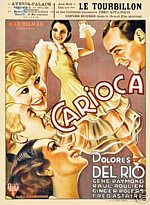
pre-revolutionary equivalent to Broadway. At first, the young dancer was given the stage name of Taheyia Mohamed. In her first solo performance, Badiya asked her personal choreographer to create a dance sequence especially for Taheyia. This dance sequence was loosely based on the Latin-American dance called Karioka which was popularized in the 1933 American film, Flying Down to Rio. This introduction of the new Brazilian Karioka dance of Carmen Miranda was so liked that she grew more popular with a variety of solos in which she utilized this form of dance that she became affectionately known as Taheyia Karioka. In 1936, Taheyia danced for King Farouk’s wedding procession, significantly accompanying the singing of Om Kalsoum. A great admirer of Taheyia’s dancing Om Kalsoum stated that she would prefer to watch Taheyia over any other dancer because ‘she was the only one who could sing with her body.’ Later, Mohamad Abd El Wahab would say that ‘Taheyia was able to show a great deal of movement in such a very little space.’ Taheyia became very well-known in the 1940’s and began to attract a high level of attention from movie producers and, consequently, rose as one of the most formidable dancers in Badiya’s cabaret. Despite the air raids and siren blasts, which blasted without warning and a constant reminder of war, nightlife flourished with the anticipation of what tomorrow might bring. This, as well as the contributing economic influences of World War II, contributed to a Golden Age of Egyptian Cinema industry at such a level that formerly has never been equaled in the history of Egyptian cinema. About 150 film production companies operated in Egypt at that time, each producing a minimum of three films per season. Because of these troubled times, the most popular themes of these movies centered around comedy dance musicals which entertained and helped to calm the masses, allowing them to forget the ongoing war that surrounded them. Because of her talent, beauty, and charming personality, Taheyia found herself in constant demand first dancing, then singing and dancing, and then singing, dancing, and acting in movies, ultimately obtaining the lead roles in top films.
Taheyia’s first appearance as a dancer was in a 1935 film entitled Dr. Farhat directed by Togo Mizrahi. In 1942, she appeared in her first starring role in a film called Unib al Ghalat (I Love the Wrong). But her most important early film in which she was approached by Naguib Al Rihani about acting in one of his widely acclaimed motion pictures and where she starred opposite Naguib was Lu’bat al-Sit (The Lady’s Play) released in 1946. This film, now a classic of the Egyptian screen, established her as a big star. She often took the role of the “Mu’alima” or the courageous and independent yet virtuous and traditionally oriented mistress. In later years, she took the roles of queens and mothers. However, in spite of these acting, singing and dancing demands, she was careful to keep her work at Casino Badiya as well as the other various nightclubs, which sprung up during that time. By now Taheyia was enjoying the fame and fortune of an accomplished performing artist. In the late 1940’s, Taheyia danced only at the more important functions held by or for the King and other royalty as her fame had now put her in the center of attention at all Egyptian high royal society social gatherings. Prior to the Egyptian Revolution which took place on July 23, 1952, she spoke at national official celebrations as well as private royal parties. With her supreme command of the English and French languages which she had taught herself in her early years, she was often seen holding her own amongst the foreign invited dignitary. Although wealthy herself, she disliked the rich who made no use of their wealth to help the less fortunate and was often times heard to say that she had allergies to these people. Taheyia was a political activist. Typical of her style, she went on strike following a change in the laws concerning workers’ unions in 1987 perceived as unfavorable to actors. She was extremely independent and a non-conformist. Although she was influential in the political circles during and after pre-revolutionary times, she did not always use her contacts to promote her career. Although she expressed disagreement with the monarchy, she nonetheless retained nostalgic memories of the old regime after the revolution. Stories have it that Anwar Al Sadat hid in Taheyia’s sister’s house following his involvement in a political assassination in 1946. Tahyia was a founding member of the HDTO party in 1953 expressing support for post-revolution return to constitutional democracy and because of that she was jailed for 101 days. Her jail time should have amounted to 30 years for nonpayment of back taxes, due to her friendship to King Farouk who preferred she not pay taxes, but many film-makers stopped producing movies and many theaters closed their doors all in defiance to Taheyia's incarceration and unified support of her release. While imprisoned, she went on a hunger strike to protest against the possibility of physical abuse. And yet, she actively encouraged the revolution. Her case was settled and she was released. She temporarily stopped performing when the new regime accused her of conspiracy, imprisoning her, and taking away most of her properties. Taheyia stopped dancing completely after the revolution but continued to star in Egyptian cinema. Some unforgettable movies in which she starred are La Bat Sit (The Ladies Game), Shabab Irmaat (Youth of a Woman) which was shown at the Festival of Cannes in 1956 and which won the international directing price in1958, Om el Aroussa (The Mother of the Bride), and Samara (Samara). She also starred in a film called Habibi Al Asmar (My Dark Darling) with her rival, Samia Gamal in 1958. These films made her a screen idol and many yearned to be like her. Out of this title came a phrase, “The Taheyia Karioka Complex” coined and labeled to those who went on to emulated her. From the 1960’s on she began to put on weight. Hollywood productions in the late 1960’s offered her an opportunity to work in one of their productions, but because of the 1967 War, the offer was canceled and she returned to Cairo. One of her last films in 1972 entitled Khali Belak Min Zouzou (Take Care of Zuzu) showed a very heavy Taheyia co-starring with So'ad Hosny in a Zeffa, or marriage party dance scene. Her last film in 1986 was Li-l-hob Qissa Akhira (Love’s Last Story).
Taheyia married 14 times – twice as many times as her father. She was firmly adamant in marrying before consenting to sex with any male interested in her and often advised young women to do the same. Sex without marriage to a woman was a label for whore. Taheyia would never be thought of as a whore. Among her marriages were to well-known Egyptian actor Rushdi Abaza (who was also later married to Samia Gamal), to singer Muharam Fouad, to directory Fatin Abd El-Wahab, and to an American army officer whom she married during WWII and who took her to America after the war. But because of American culture and its strange ways, she became very homesick. She divorced her American army officer and went back to Egypt. In the 1980’s, the spread of Islam and its fundamental militancy proved to be a big blow for Egypt’s belly dance industry. As a result, several dancers publicly renounced their pasts and donned the Islamic veil. In her later years, Taheyia also took to wearing the hijab and went on a pilgrimage to Mecca assuming the title Hagga, a religious title referring to those who had made a pilgrimage to the Holy Lands and denoting a high degree of lower/middle class respectability. However, she never renounced her former profession and remained very proud of her chosen career to the end. As a result, many saw her as a role model and admired her for her spirited defense of the entertainment industry. In
her pre-retirement, Taheya remained in Cairo. Her last husband, Fayez
Hallawa, was a well-known director-dramatist actor and
journalist who acted in several theater comedies with a political
theme. She had fallen in love and married him – a much younger
man – who had written a play called Yahya Al-Wafd (Long
Live the Wafd), which turned out to be very bad. Sadly, this
relationship lasted a very short time. One evening, the young man kicked her out with only her clothes on her back along with a purse and a small book of phone numbers. An opportunist, he had robbed her of all of her money, property, pictures, films, and memorabilia. Taheyia managed to call a good and trusted friend whom she had helped many times before. This friend took Taheyia home until she was able to manage by herself again. In an effort to give Taheyia back her dignity, she called all directors, television stations, and theaters requesting small parts for Taheyia to act as mother or grandmother. After a time, Taheyia was able to save enough money to buy a small apartment in Dokki next to the Sheraton Hotel in Cairo. Taheyia passed away on September 20, 1999 at the age of 80 from a heart attack. Her funeral services were held at the Sayda Nafisa Mosque after Egyptian Culture Minister Farouk Hosni led her funeral procession. She was buried in the family cemetery in Basateen. Taheyia left having elevated the dance to the high level that it enjoys today through the introduction of the dance to the general public via her performances in Egyptian films and in theater performance. She refined the dance to the point that Egypt's highest society now accepted it and the music that went along with it. It is because of Taheyia that dancers today enjoy studying this dance around the world. Although Taheyia was married 14 times, she was unable to conceive and become a mother, which saddened her up until her final days. However, in her quest for children, she surrounded herself with caring for her brother’s children and by supporting and sponsoring various children’s charities and orphan houses. Additionally, she adopted a daughter in whom she named Atiyat Allah. During her lifetime, Taheyia was granted many awards for achievement in the Egyptian film industry as well as the field of theater and from the newly formed government. She has appeared in over 300 films, plays, and television soap operas. more info:
Have
a comment? Send
us a letter! Ready
for more? 3-3-05 The
BDSS Experience and Miles Copeland; Doing What He Does
Best by Sausan 7-17-04 Dancing
in North Beach by Sausan 4-11-08 I
Loved the Old Days at the Bagdad! by Habiba Nawal 4-8-08 Divorcing
Belly Dance From Burlesque by Miles Copeland 4-7-08 When
the Hip Hits the Fan by Princess Farhana 4-3-08 Dances
along the Nile, Part 1: Raks Al Asaya by Gamila
El Masri, Reprinted with permission, from Bennu, Issue
Vol.6 #3 3-31-08 A
New Venue for Rakkasah Festival West by Susie Poulelis |