The Taxim from a Dancer's Perspective: Tarab or Tyranny? August 27, 2006 by Najia Marlyz “Taxim” or “Taqaseem” (however you prefer to transliterate the word into your own language) is an Arabic musical term that refers to a special section of a musical arrangement in which a musician displays his mastery of the technique of playing his instrument. Flexible in length, and primarily featuring one instrument more prominently, the taxim is improvised. Far from being random in structure, Arabic taxims are comprised of one or more basic structures, each called a “maqam”, which acts something similar to a scale within a key of music. Each maqam has its own name and general tone or mood. As the musician plays a maqam as part of a taxim, it is his option to improvise around the part of the form he has reached, the process is much like taking little side tours to museums, historical sites, and shopping on a vacation trip. Inevitably, he must get on with his progress along the set itinerary. Though it would be nice if every dancer knew exactly what maqam she is hearing, it is not essential to recognize it specifically or even know its name; that is the business of the musician. The dancer has only to feel the impetus of the music to anticipate when the music will pause, when it will resume, and with what strength. The process similar to reliance on the gut-level instinct one develops that enables one to hum along with a tune one has never experienced before. It helps
to consider the instrument that one is hearing. If it is
a wind instrument, for instance, the dancer knows that the musician
activates it with a breath and that the exhalation can only be
sustained for a finite period. In other words, the musician
is going to have to stop blowing if he is to take another breath.
The dancer, then, must be aware of her musician’s ability in this regard. Musicians do not merely stop for another breath however! They pause after each section much like placing a period at the end of a musical sentence; in a sense, they create punctuation and organization to music much like one does in speech. In general,
knowledgeable dancers expect most maqamat (plural of maqam)
to proceed with a particular ascent along a sort of “scale”
and resolve with a decent. Most accomplished dancers
are intuitive about music; it should not be a mystery to the dancer
where this musical meander is heading or where it will resolve
ultimately.
A major concern for a dancer will be the length of time of any taxim lasts. This is a matter that is dependant upon the virtuosity of the musician as well as the dancer’s ability to match it. In some cases, a dancer is able to add fuel to the fire of the musician’s presentation. The advent of electronically produced music has muddled the historical clarity of interpreting music for the modern day dancer in this regard! Although (in some ways) electronically produced music has expanded possibilities for some musicians, it has changed the traditional relationship between dancer and musician. The dancer’s ability to easily anticipate pauses in the taxim played on a wind instrument is somewhat compromised: nowadays, your “wind instrument” may be, in reality, a keyboard synthesizing the sound of a nai, zourna, clarinet, or other wind instrument. If this is the case, the musician playing the keyboard does not need to stop for breath and you, as a dancer, must accustom yourself to this musician’s tuneful whims along the road he travels to the destination of his taxim! Therefore, because the instrument and its player is controlling the actual musical taxim, the dancer is obliged to improvise her dance as the musician improvises around the traditional form. Many, perhaps even most of the time, there is no percussion in use behind, or accompanying, a taxim.
It stands to reason that the more dancers are familiar with the various Arabic maqamat, the easier it will be for her to anticipate the musical progression and dance accordingly. A skilled dancer will suspend movement when sound is suspended, sustain it when sounds elongate, increase intensity as sounds become louder, or more rapid as the musician increases speed. “Where is the artistry in that?” you might ask. My answer is:
My mentor, Bert Balladine always had a favorite saying: “You have nothing to dance about until you are at least 30 years old!” That statement always irritated the younger dancers because, usually, they had no idea what the years between 20 and 30 could do toward accumulating memories and experiences that add passion and conviction to one’s dance. Those memories and experiences form a wellspring of mind images that emerge from musical moods and the strains of a heartfelt taxim. In turn, the images compel or ease the appropriate choice of movements a dancer might fit to the improvisation.
Additionally, the skill of improvisation in dance is deceptively difficult to perform with polished movement; thus, many dancers shy away (whenever possible) from placing themselves in the position of dancing with even a short taxim.
A contributing factor in the apparent overlooking, avoidance and fear of performing the taxim is that dancers, these days, try to launch their careers in Oriental dance by winning series of competitions that have neither time nor atmosphere for the patience and serenity of the subtle art of the taxim. In order to win, dancers begin with high-energy music that builds in intensity from that high point to a more raucous and climactic end. However, it is sad to note that some musicians have limited skill with their instruments, and the need for a taxim disappears in the slap-dash playing of whatever tunes he seems to have mastered currently. True collaboration between the dancer and the musician playing the taxim creates a superior performance. Similar to the dance that emerges along with the drum solo, the dancer expresses what she hears and the feeling (tarab) it produces. Her skill at doing so may cause a musician (who is open for such repartee) to sustain portions of his taxim through improvisational playing.
In some cases, more than one maqam blends into one taxim. The resulting give-and-take produces Oriental music and dance at its best and can be breathtakingly captivating. The
dancers’ movements with taxim are not necessarily all slow—they
can become dynamic and fast paced if that is where the particular
maqam leads. She will, through intimate association with this
sort of improvisation, dance within a set framework that has become
familiar to her with much experience in listening. Her gut-level
instinct for the resolution of the journey of a typical taxim
through a maqam will guide every move; the more experience she
has, the more competently she will dance, displaying polish and
certainty. With just a few instances of success at this
type of dance improvisation, often a dancer will become enamored
by its seductive adrenalin and feeling of inspiration. Few who
achieve dance success in this fashion continue enslavement to
choreographed performances.
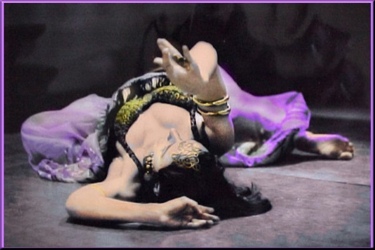
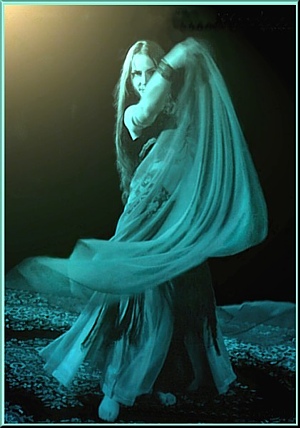
All stories, plays, poems, songs, and dances need discernable beginnings, middles and ends; the taxim can become sensuous veil dancing, dramatic and fascinating floor-level dance, or simply mesmerizing movement patterns demonstrating a sort of unearthly, unreal, soiree with whatever persona a dancer has created for stage her presentations.
Some suggestions for dance improvisation with either a live or recorded taxim:
Have
a comment? Send us a
letter! Ready
for more? 11-21-02
The Great American Belly
Dance Veil Routine by Najia El Mouzayen 9-4-06
Tatseena's Bellydance Fantasy Festival
2006 Photos by Lynette & Carl Sermon
9-14-06
Territorialism Undermines
Event Sponsor's Efforts, Interview with Dee Dee Asad by Lynette 9-12-06
From the Land Down-under, Part
2: Northeast and Canada by Trisnasari 9-11-06 "The Spirit of Egyptian Dance" Shareen El Safy- with the George Lammam Ensemble Workshop & Show, Photos by Carl Sermon, Sponsored and produced by Debbie Lammam July 22 & 23, 2006, Dance Mission Theatre, San Francisco, CA 9-7-06
Amani's Oriental Festival 2006: June 20-25, 2006 by Beverley
Joffe |


 A
skilled musician has an innate sense of rhythm that emerges subtly
within his taxim much as the “beat” emerges within captivating
poetry.
A
skilled musician has an innate sense of rhythm that emerges subtly
within his taxim much as the “beat” emerges within captivating
poetry.  Nowadays,
few Oriental dancers excel in the art of imagery—and therefore,
improvisation. One apparent cause of this lack in performing
artistry lies in the attitude that choreographed dance is superior
and more respectable than extemporaneous dance.
Nowadays,
few Oriental dancers excel in the art of imagery—and therefore,
improvisation. One apparent cause of this lack in performing
artistry lies in the attitude that choreographed dance is superior
and more respectable than extemporaneous dance. 
 Often
these days, a current dancer ignores the short taxim passage that
begins many arrangements, preferring to make her grand entrance
with her sagat ringing out and her veil ablaze with movement.
Most likely, dancers who include the taxim in a set will request
that one or more of them are included after each popular song
or medley of familiar tunes. In that case, the taxim becomes
a sort of mood change or buffer zone between musical arrangements
of traditional or modern tunes. However, we might also recognize
its contribution to an audience’s relaxation and its retreat from
bombardment by constant, irritating high-energy musical sound
and dance movement. Audiences thrive and respond positively
to variety and contrast. As much as in any other part of a dancer’s
artistry in storytelling and drama, a taxim provides excellent
opportunities for both.
Often
these days, a current dancer ignores the short taxim passage that
begins many arrangements, preferring to make her grand entrance
with her sagat ringing out and her veil ablaze with movement.
Most likely, dancers who include the taxim in a set will request
that one or more of them are included after each popular song
or medley of familiar tunes. In that case, the taxim becomes
a sort of mood change or buffer zone between musical arrangements
of traditional or modern tunes. However, we might also recognize
its contribution to an audience’s relaxation and its retreat from
bombardment by constant, irritating high-energy musical sound
and dance movement. Audiences thrive and respond positively
to variety and contrast. As much as in any other part of a dancer’s
artistry in storytelling and drama, a taxim provides excellent
opportunities for both.