Gilded Serpent presents...
"Ya
Mustapha!":
A Song Conquers the World
by Meissoun
One of the
most covered songs of the last 50 years is not from the Beatles
but an old Oriental folk song. It seems that nearly everyone has
heard at least one version of "Ya Mustapha!”
Many
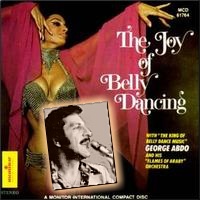
dancers know George Abdo's version of this piece, and another
one, arranged and played by John Bilezikjian, is popular, too.
This familiar tune appears also on a Mezdeke CD (Number 6),
but there, its title appears as "Ruh Rahleh".
 It
is difficult to track the roots of "Mustapha",
but it is almost certain that they were in North Africa,
and most probably, in Egypt. One source told me that the song
appears in a popular old Egyptian film. What I know certain is
that it is a popular party song in the entire Middle
East! It
is difficult to track the roots of "Mustapha",
but it is almost certain that they were in North Africa,
and most probably, in Egypt. One source told me that the song
appears in a popular old Egyptian film. What I know certain is
that it is a popular party song in the entire Middle
East!
The
Arabic text is about a man named (what else?) Mustapha, who has
been away from home for a long time and the lyrics ask him to
come back soon—or at least write home.
In the
Turkish version, a young woman tells her boyfriend: "Let’s
get married and put an end to this; I have a child in my belly!”
In Europe,
the song became popular with the help of Bob Azzam
(who published it in 1960 in France with rather silly lyrics consisting
of at least 3 languages): "Chérie je t'aime, chéri je t'adore
- como la salsa del pomodoro" (Darling, I love you, darling,
I adore you – like tomato sauce). The number, considered cute,
was a big hit and progressed up to number 23 in the British hit
charts and even number 1 in Belgium. It also sold well in Greece,
Italy, and Brazil. Bob Azzam recorded other songs like "Fais-moi
du couscous chéri" (Make couscous for me, darling).
Bruno
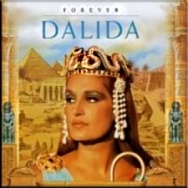
Gigliotti (Orlando) the brother of famous
singer Dalida also covered the song. Bruno
and Dalida grew up in Cairo where their father worked as first
violinist at the opera. (Dalida even won election to the title
of Miss Egypt in 1954.) Orlando became a famous singer and worked
in all the important nightclubs in Cairo. In the early ‘60s, he
went to Paris to become a big star like his sister. He remembered
short parts of the song "Ya Mustapha” and recorded
it. Therefore, long before Raï was developed in North
Africa, Orlando became the first singer to record
a mix of both French and Arabic lyrics. Two of his other songs
were entitled "Fattouma" and "Ali Baba,"
and he recorded repeatedly in both French and Italian. From 1966
on, he served as the Artistic Director and Producer for Dalida.
After its
initial successes, "Ya Mustapha“ did not loose its
popularity–to the contrary! The simple melody, to which everyone
can join in and sing along, soon became a standard and still belongs
in the repertoire of every presentable French karaoke-list, as
well as band repertoire, around the world. The best-known interpretation
in Turkey is by Dario Moreno. Over the years,
uncountable versions also appeared in every language: Maltese,
Flemish, Hindi, English, German and others. Most of the versions
are parodies and comical numbers; some include raunchy lyrics.
In a German version that Leo Leandros sang in
the early ‘60s, there is a lyric stanza about a nut seller in
the bazaar who falls in love with the sultan’s lovely daughter.
In 1967,
Clinton Ford recorded the song under
the name of "Ali Ben Dhown" on a single that had on
its verso, a similarly silly song titled “Turkish Delight.”
 Frequently
learned and sung phonetically (without understanding of French
and/or Arabic), the song’s lyrics changed inadvertently. For example,
I found a version on a Thai discussion forum where the word “pomodoro“
had become “dommo do re.” Frequently
learned and sung phonetically (without understanding of French
and/or Arabic), the song’s lyrics changed inadvertently. For example,
I found a version on a Thai discussion forum where the word “pomodoro“
had become “dommo do re.”
The French
label APC produced a 1994 titled "Think about Mustapha"
that unites nine versions and interpretations of this song: a
jazz version, a ‘60s surf sound, raï, and even a fusion version
featuring an Indian sitar!
Beware!
The Arabic name Mustapha (Mustafa) is very popular and not every
song that titled “Mustapha” stems from the original song.
The Queen’s
album, “Jazz,” includes a song called “Mustapha,”
and The Clash feature their “Mustapha Dance” (better
known as “Rock the Casbah”). Additionally, a "Ya
Mustapha" exists by the Sabri Brothers who ordinarily
play religious Qawwali music, however, these are
actually other melodies with only the same title in common.
 If
you are an enthused Mustapha fan, you can also program the tune
as a ring tone on your mobile phone: If
you are an enthused Mustapha fan, you can also program the tune
as a ring tone on your mobile phone:
Tempo
= 125
Nokia KeyPress : 48, 69, 68, 69, 6, 68#, 1*, 6**#, 6, 59,
58, 5, 5, 59, 5, 68, 6#, 6, 5, 49, 68, 69, 68, 69, 6, 68#,
1*, 6**#, 6, 59, 58, 5, 5, 59, 5, 68, 6#, 6, 5, 49, 68, 6,
5, 49, 4, 58, 6, 5, 4, 69
(found at: www.rannat.com) This link disabled-
a reader reports getting virus warnings at this site, visit
at your own risk!- ed (thanks Leyla!)
Have
a comment? Send us a
letter!
Check the "Letters to the Editor"
for other possible viewpoints!
Ready
for more?
7-12-05
Belly
Dancer of the Year 2005 Finals photos by Monica and Susie
May
28, 2005, San Ramon, California.
7-5-05
Sirat Al-Ghawazi, Part
6 by Edwina Nearing
Begun
in the mid-1970's , the early sections of "Sirat Al-Ghawazi"
were first published under the title "The Mystery of the
Ghawazi." We are happy to be able to respond to the continued
demand for these articles by making them available to our readers
worldwide.
7-5-05 Belly Dancer of the
Year 2005 Preliminaries photos by Monica
May
28, 2005, San Ramon, California.
6-20-05
The 2005 Eilat Festival, My Fete
in Israel by Orit
This
was the first professional festival of its kind in Israel. Despite
its being overwhelmingly exhausting and loaded with material,
the celebrating continued in the lobby, well into the night, with
endless conversations and the exchange of tales.
|